Patient: Male, 61 years old
Recent Relocation: From Illinois
Occupation: Rental car associate at RSW International Airport; walks on average 7 miles nightly
Background:
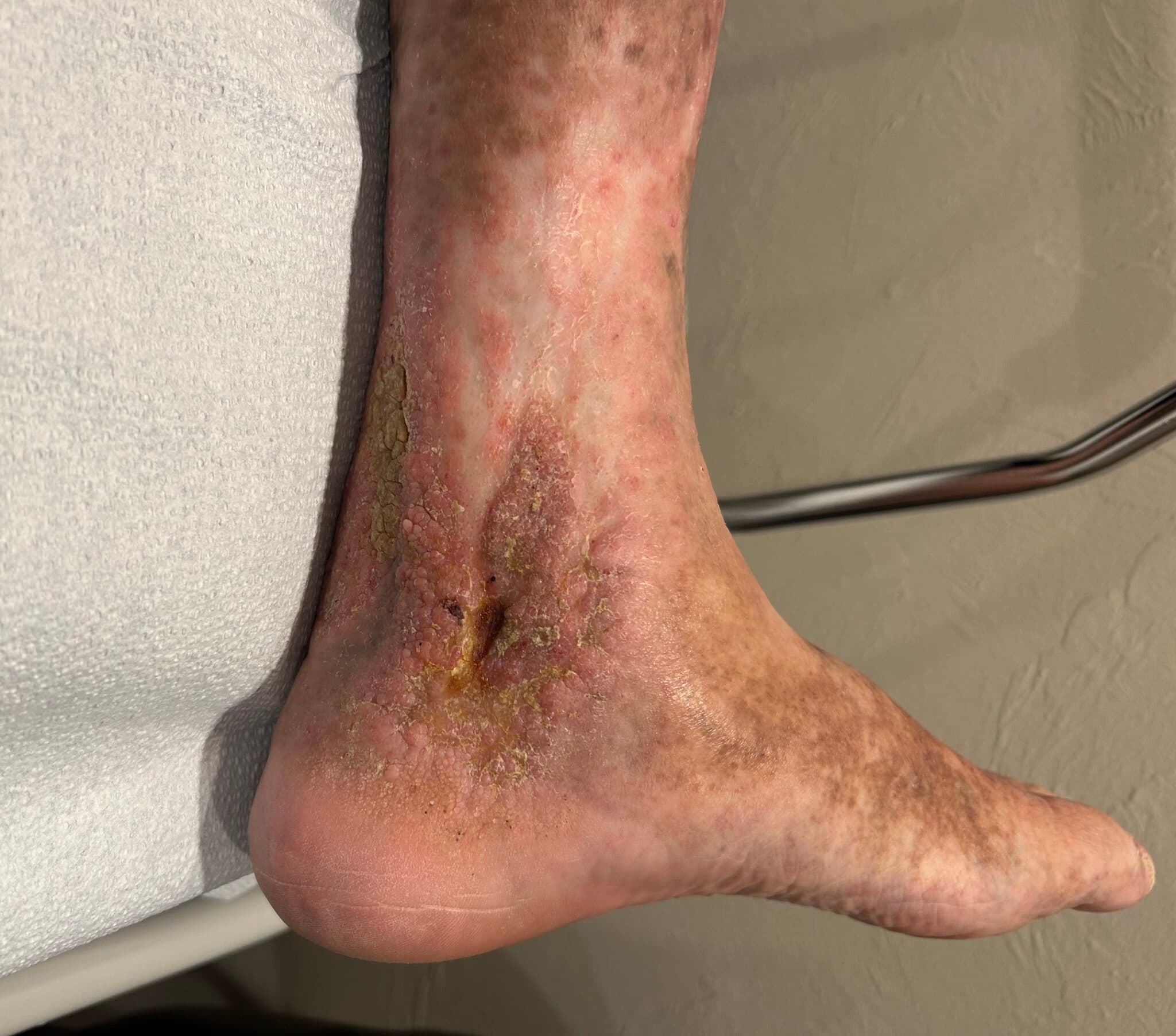
The patient, previously a dive shop owner, presented with a long-standing history of right leg venous disease. For many years, he noticed a firm area along the inside of his right ankle (“gaiter region”) that gradually worsened while working a job requiring considerable walking. By the end of each shift, he experienced notable swelling, stiff ankles and deep sock line indentations, with only elevation providing relief. These symptoms negatively impacted his quality of life and ability to work comfortably.
Physical Examination:
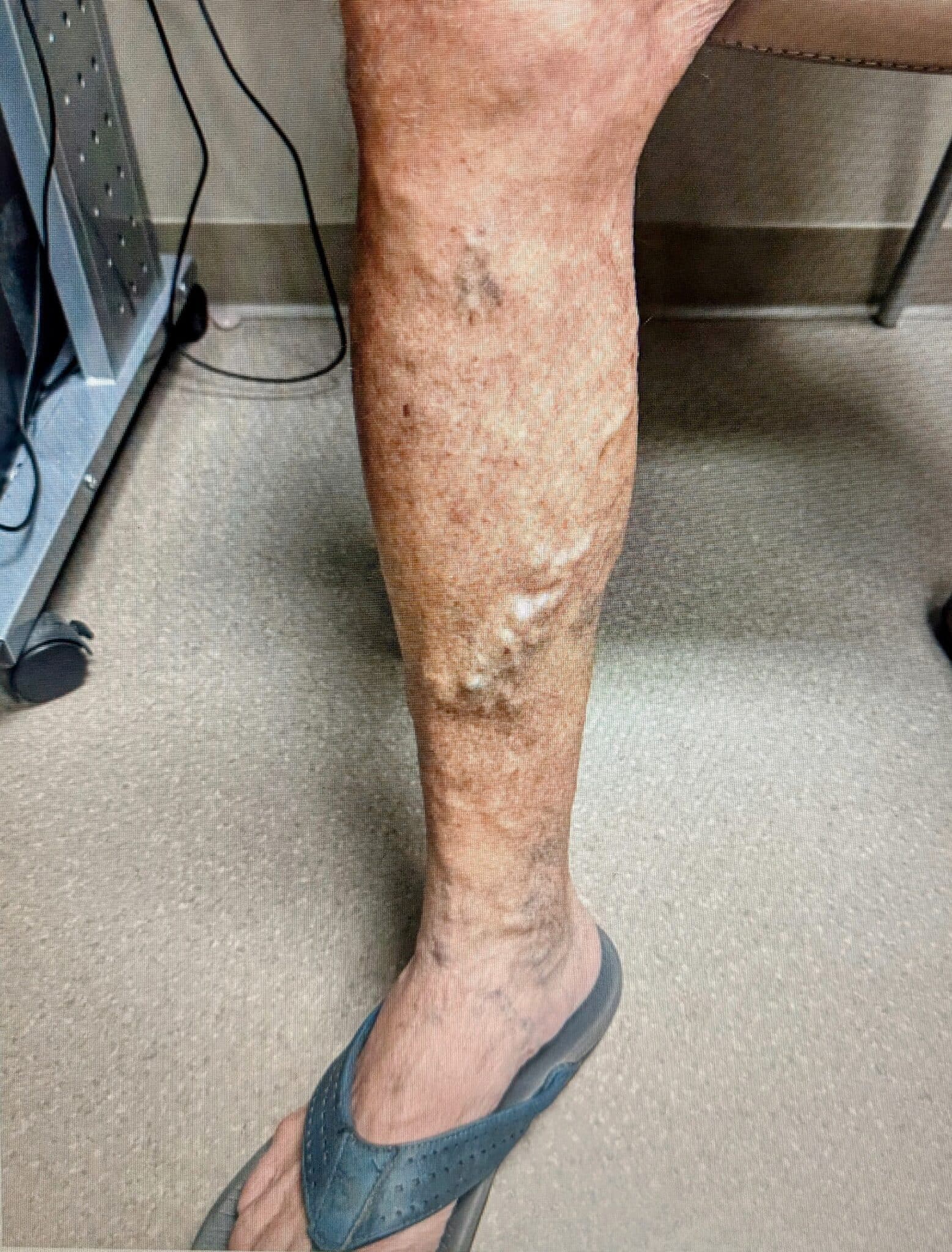
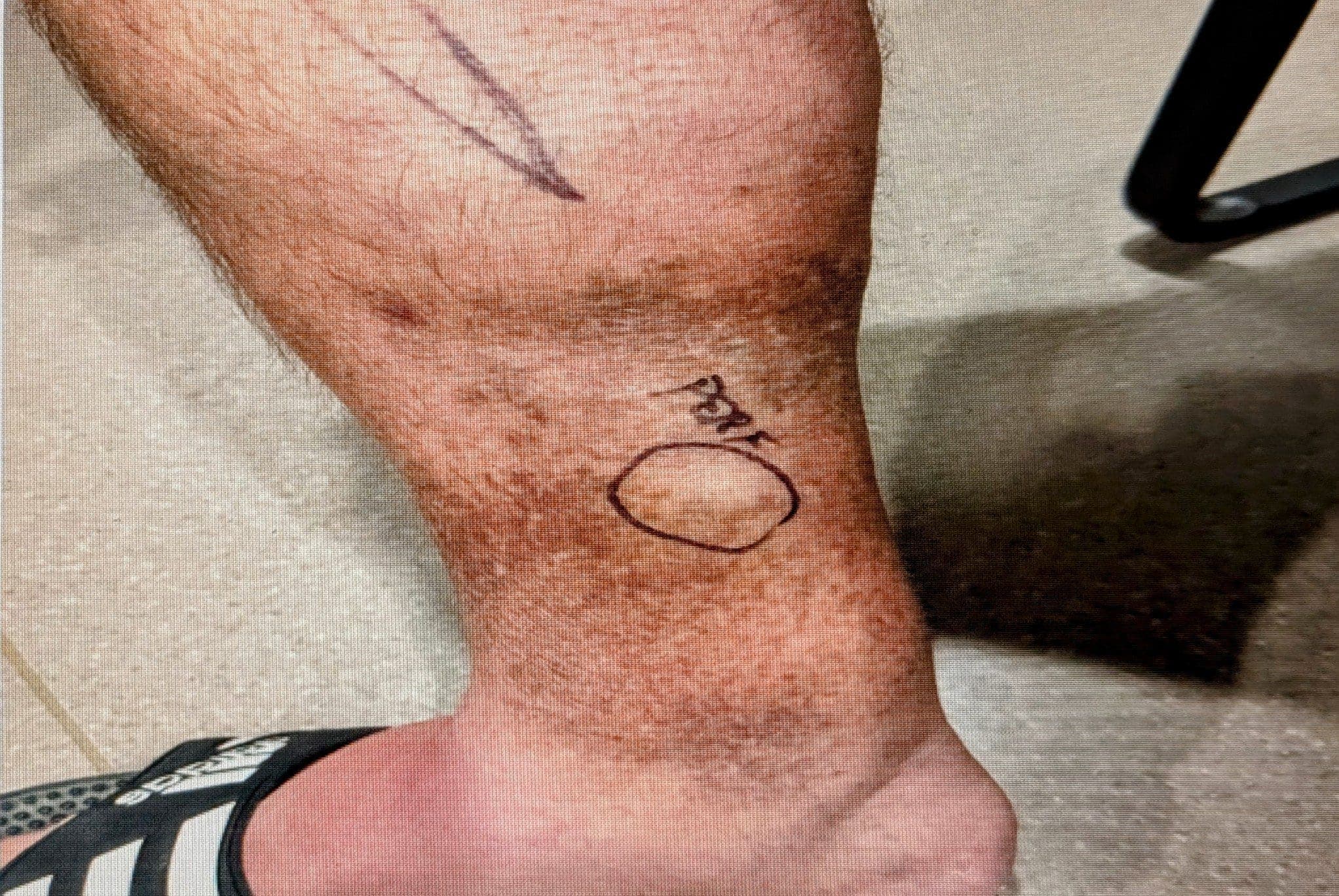
Right Leg: Chronic skin darkening (stasis pigmentation) and dermatitis over the medial ankle and gaiter region, associated with firm tissue changes and a noticeable bulge corresponding to a large, abnormal perforator vein. Swelling worsened with activity. No open ulcers were present.
Left Leg: Unremarkable exam.
Overall: Otherwise healthy, tall male (6’4″).
Diagnostic Findings:
A venous ultrasound revealed:
- Significant backward blood flow (reflux) in both the right great and small saphenous veins, stretching from the groin to the lower calf
- Large perforator vein centrally placed in the area of skin changes
- Deep veins were normal without evidence of a clot
Diagnosis:
Chronic venous insufficiency with reflux (malfunctioning vein valves) of the right great and small saphenous veins
Pathologic perforator vein incompetence in the medial ankle/gaiter region
CEAP Classification: C4b (chronic skin changes and tissue hardening due to vein disease)
Treatment:
The patient received:
- Endovenous ablation (minimally invasive heating) of the right great and small saphenous veins
- Microphlebectomy (removal of bulging surface veins)
He tolerated these procedures well. The prominent perforator vein in the area of hardened skin will be reviewed at a follow-up for possible targeted treatment, depending on symptoms and healing.
Clinical Insight:
This case shows classic chronic venous insufficiency and related skin changes in an active individual. A large faulty perforator vein contributed to local inflammation and hardening. Addressing venous reflux with ablation can significantly reduce symptoms, prevent further tissue changes and decrease risk of ulcer development.
Summary:
Treating chronic venous insufficiency early in active individuals like this patient can restore comfort, reduce swelling and prevent progression to non-healing ulcers. Ongoing evaluation and targeted care will optimize long-term outcome.
Clinical Photographs and Imaging:
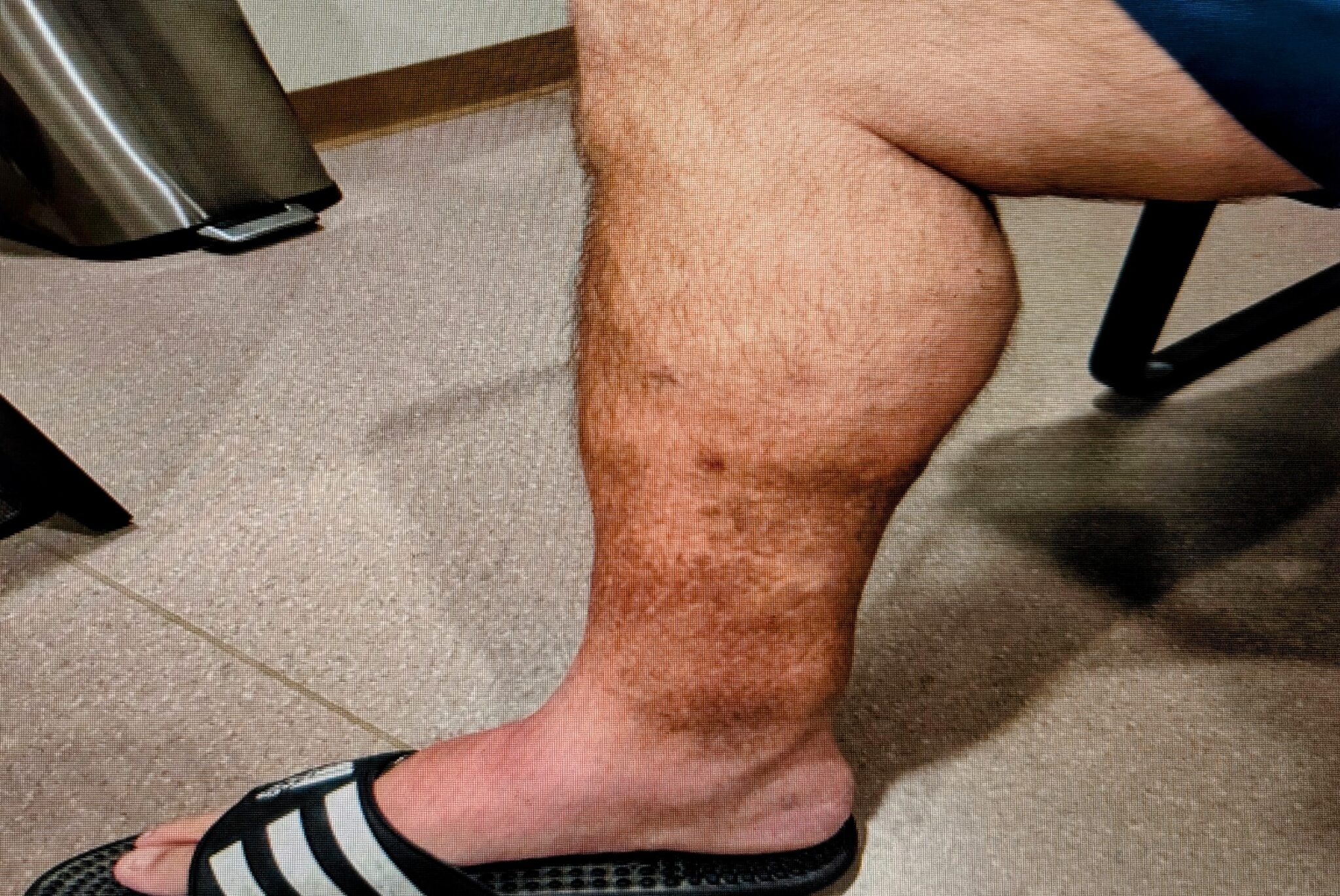
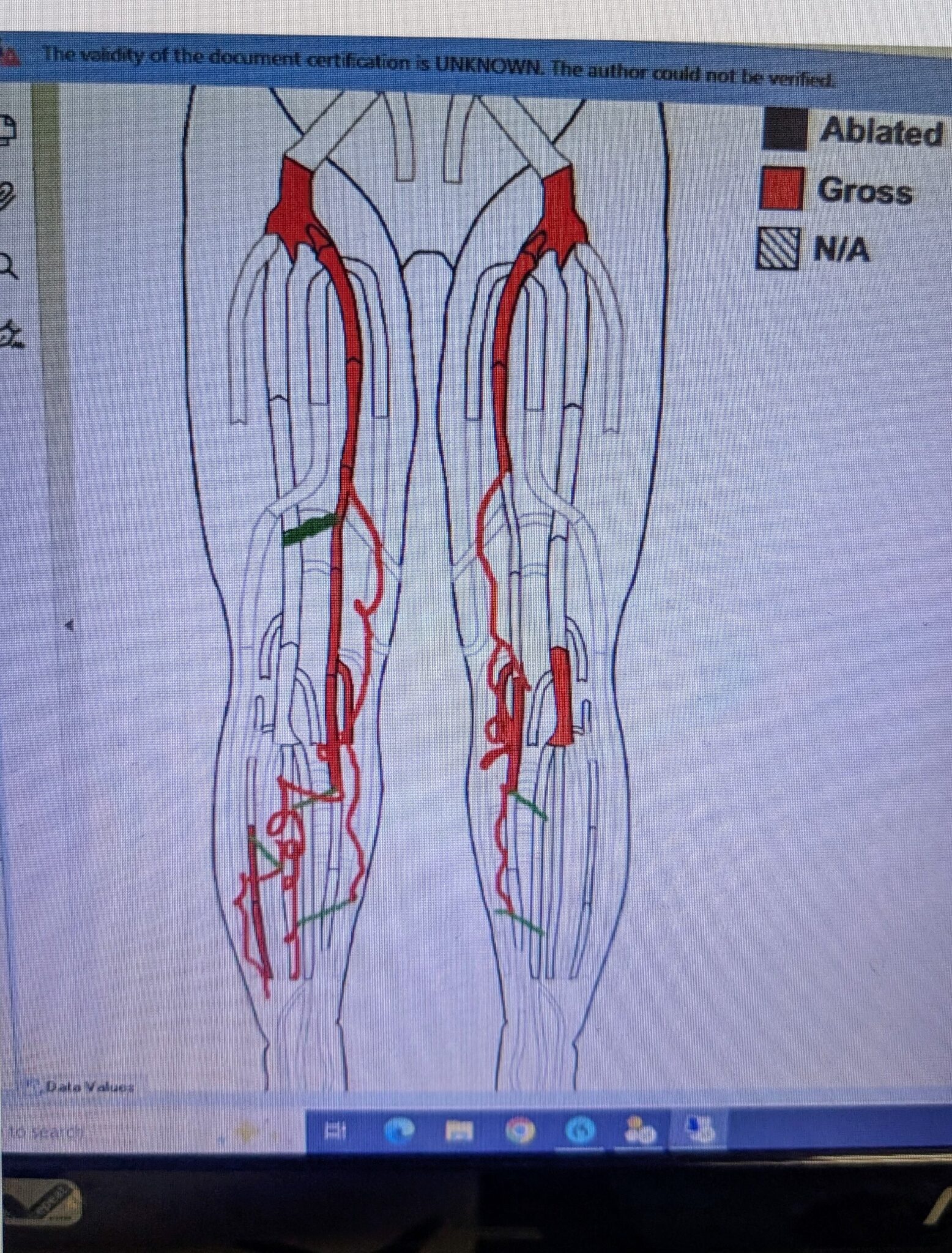
Venous Disease
Signs
- Spider Veins
- Varicose Veins
- Leg Swelling
- Leg Skin Discoloration
- Leg Vein Bleeding
- Leg Ulcers
Symptoms
- Heavy Legs
- Swollen Achy Legs
- Itchy Leg Skin
- Restless Legs
- Nighttime Leg Cramps
- Neuropathy