Patient: Female, 72 years old
Visit Type: New Patient Consultation
Referring Provider: Primary Care Physician
Background:
Gail, a 72-year-old woman, was referred for evaluation of ongoing leg symptoms including swelling, aching, heaviness, fatigue and clearly visible varicose veins, particularly along the inside of her left calf. She had previously seen another vascular surgeon, where an ultrasound was performed. She was told that her veins were “purely cosmetic” and not medically significant. Unsatisfied and still symptomatic, she sought a second opinion for further assessment.
Physical Examination:
On exam, Gail appeared healthy and in no acute discomfort. However, her legs showed clear signs of chronic venous disease:
- Large, noticeable varicose veins along the left inner thigh and calf
- Mild swelling (1+ pitting edema) in both legs
- Prominent veins around the ankles and the back of the thighs, more severe on the left side
These findings point to chronic venous hypertension – a condition that causes increased pressure in the leg veins and raises the risk of spontaneous bleeding from surface veins if left untreated.
Diagnosis and Assessment:
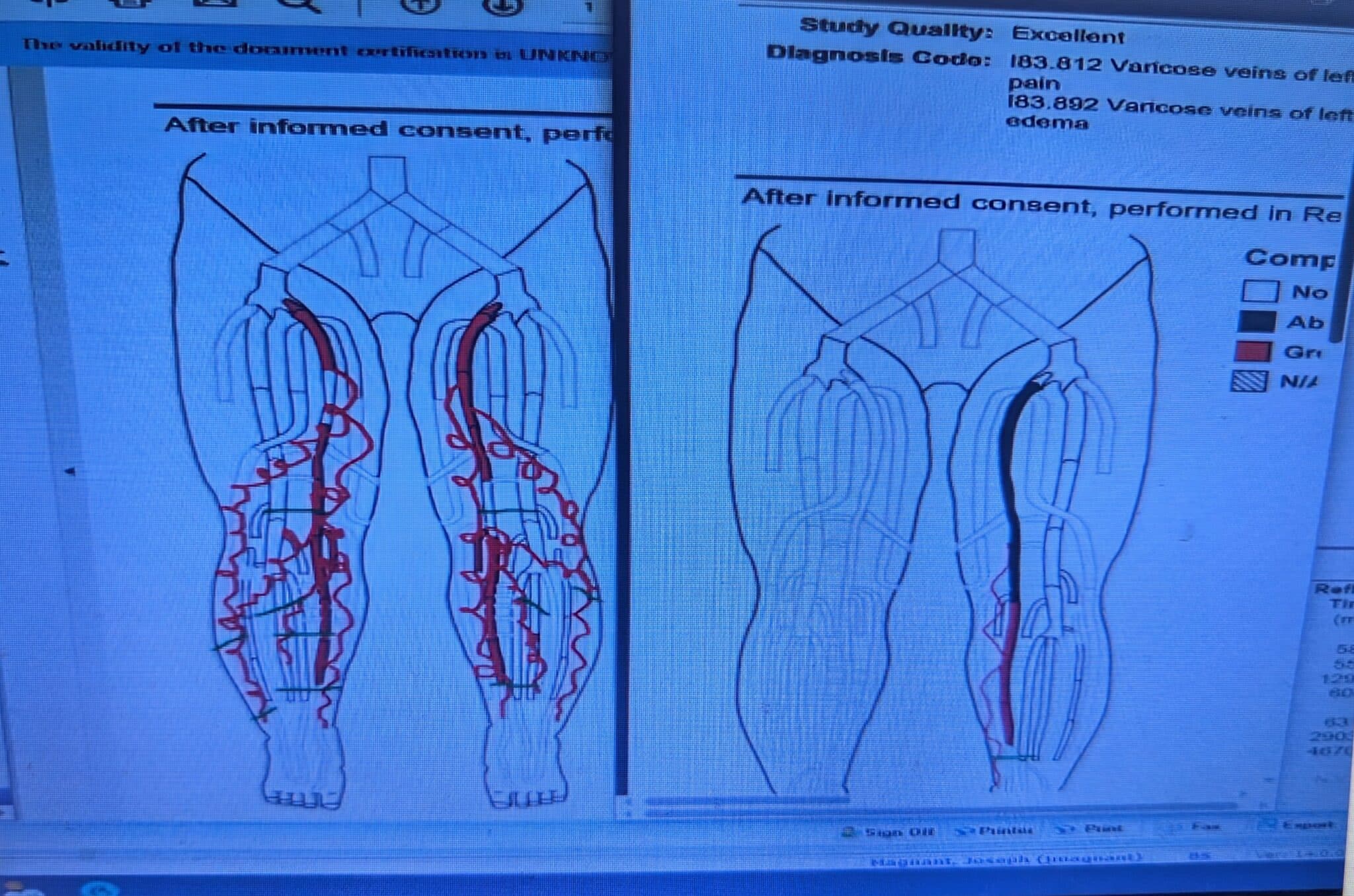
Based on her history and exam, Gail’s findings are consistent with significant venous insufficiency, not simply cosmetic varicosities. The symptoms and physical signs indicate underlying reflux (backward blood flow) in her great saphenous vein (GSV) and possibly her accessory or small saphenous veins (SSV). Her previous evaluation likely missed or misinterpreted these findings.
Discussion:
This case underscores the importance of accurate venous imaging and proper clinical correlation. Even when imaging is performed, failure to recognize or document reflux appropriately can lead to missed diagnoses. When symptoms such as heaviness, swelling and fatigue are present, they should be taken seriously as evidence of vein disease rather than dismissed as cosmetic concerns.
Plan:
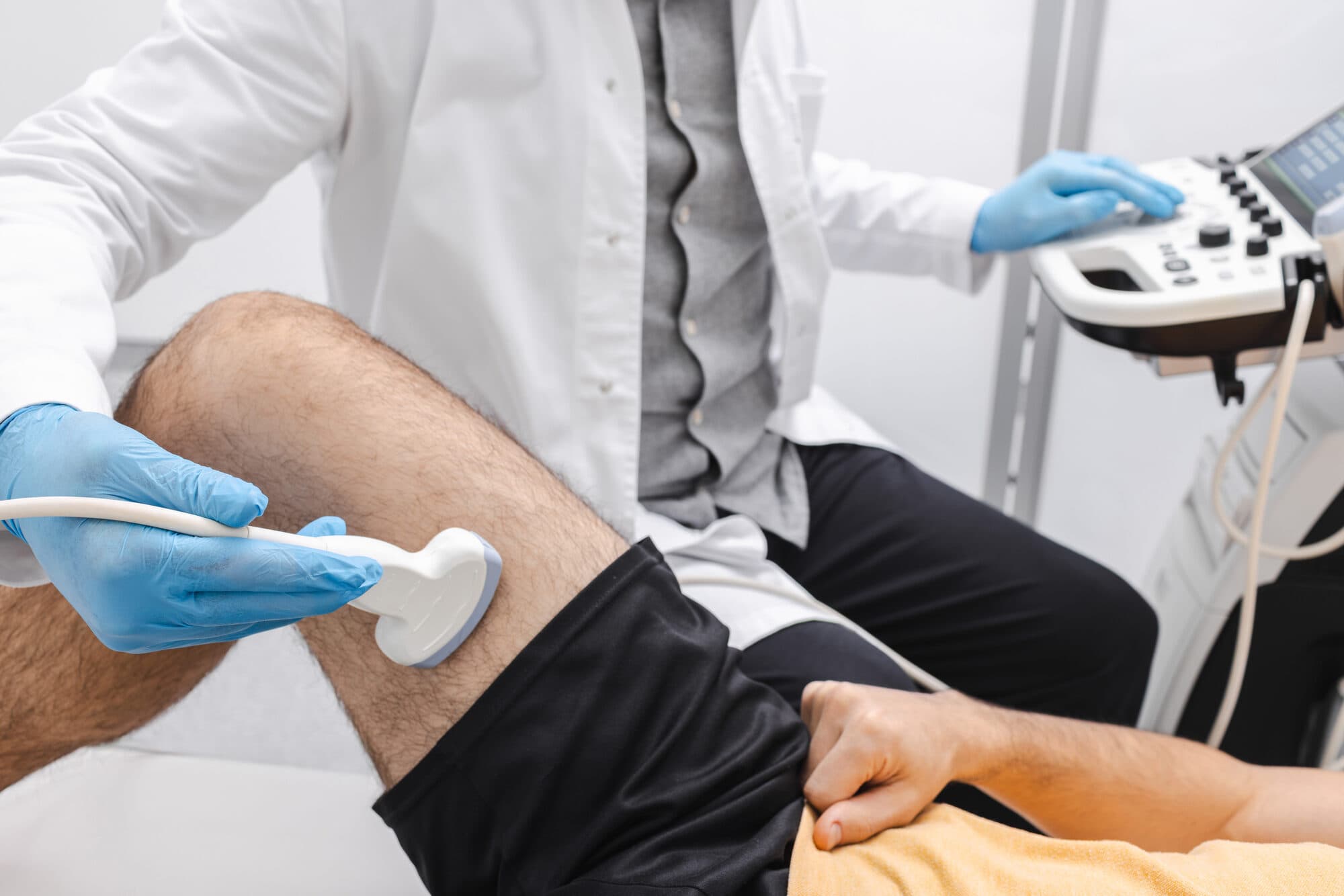
- Schedule a comprehensive venous duplex ultrasound to assess reflux in the GSV, accessory GSV and SSV in both legs.
- Follow up after imaging to review results and establish a definitive treatment plan.
- Based on expected findings, the patient will likely benefit from endovenous ablation and possibly additional therapies to relieve her symptoms and minimize the risk of vein rupture or bleeding.
Summary:
Gail’s case illustrates how venous insufficiency can be overlooked when not carefully assessed. A second opinion and a thorough ultrasound evaluation are critical to ensuring that underlying disease is properly identified and treated. With appropriate care, her swelling, discomfort and fatigue are expected to improve significantly.
Venous Disease
Signs
- Spider Veins
- Varicose Veins
- Leg Swelling
- Leg Skin Discoloration
- Leg Vein Bleeding
- Leg Ulcers
Symptoms
- Heavy Legs
- Swollen Achy Legs
- Itchy Leg Skin
- Restless Legs
- Nighttime Leg Cramps
- Neuropathy